
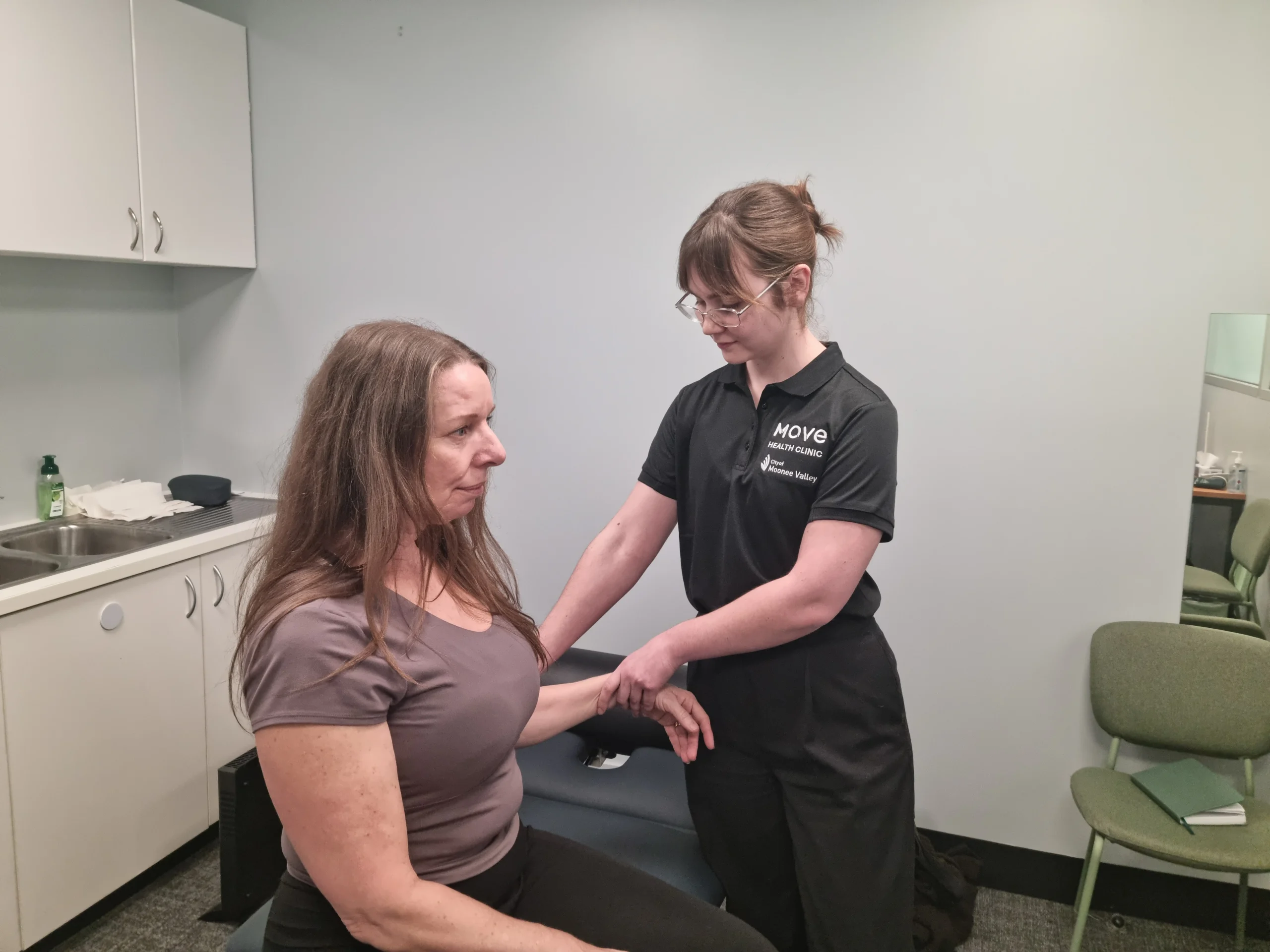
Could menopause be linked to your shoulder pain? Understanding frozen shoulder
Have you noticed that your shoulder is becoming increasingly painful or stiff, without any obvious injury? Perhaps reaching overhead, getting dressed or lifting your arm has started to feel more difficult than usual.
If this sounds familiar, you may be experiencing frozen shoulder.
Frozen shoulder can affect anyone, but it is particularly common in females aged 40–65. For those going through perimenopause or menopause, hormonal changes may play a role in increasing the risk of developing this condition.
What is frozen shoulder?
Frozen shoulder is a painful condition that affects the movement of the shoulder. Patients experience pain and stiffness of the shoulder that gradually worsens over time.
Despite its name, frozen shoulder does not mean your shoulder is permanently stuck. The condition typically progresses through three stages – freezing, frozen and thawing – and most people experience gradual improvement over time.
- Freezing: Pain is often the main symptom during the freezing stage. The range of your shoulder’s movement will gradually start to decrease.
- Frozen: During this stage, your pain will likely reduce. However, you may have very limited movement of your shoulder.
- Thawing: In the thawing stage, your symptoms start to improve. Some patients recover completely, whereas others continue to have some restrictions in the movement of their shoulder.
The timeline of frozen shoulder varies from person to person, however on average lasts 1-3 years.
What causes frozen shoulder?
While frozen shoulder is a common condition, its exact cause is not fully understood. Some factors increase your likelihood of developing the condition.
Menopause
Frozen shoulder is more common in females, particularly those aged 40–65. Research suggests there may be a link between hormonal changes during perimenopause and menopause and an increased risk of developing frozen shoulder. These hormonal changes may influence inflammation and changes to the body’s tissues, although the exact relationship is not yet fully understood.
Health conditions
Conditions such as diabetes and thyroid disorders have also been associated with an increased risk of frozen shoulder. The exact reasons for these associations are not yet fully understood.
Previous injury or surgery
Frozen shoulder caused by previous trauma to the area is known as secondary frozen shoulder. Trauma can include any type of injury to the shoulder area, including fractures, tears, or surgeries.
Not only can trauma itself lead to frozen shoulder, but the prolonged periods of rest following injuries or surgeries can also lead to stiffening of the shoulder joint.
How is frozen shoulder diagnosed?
A physiotherapist can assess your symptoms, shoulder movement and strength, and perform specific tests to determine whether your presentation is consistent with frozen shoulder. They may also consider other possible causes of shoulder pain and, where appropriate, recommend further medical assessment or imaging.
Common symptoms of frozen shoulder include:
- Gradual onset of pain and stiffness with no clear injury
- Symptoms getting worse over time
- Pain with quick, unexpected movements
- Difficulty completing daily activities such as lifting, reaching overhead, or getting dressed
- Previous history of frozen shoulder (often on the opposite side)
How is frozen shoulder managed?
Physiotherapy management of frozen shoulder includes a combination of education, hands-on therapy and exercises.
Because frozen shoulder changes over time, your physiotherapy program will also change as your symptoms and shoulder movement improve. Exercises that are appropriate during the painful freezing stage may be different from those used during the thawing stage.
Education
Patient education involves helping you understand your condition, including what it involves, expected recovery timelines, and how best to recover. The physiotherapist will also assist you with modifying the activities you struggle with, and will answer any questions or concerns that you may have.
Hands-on therapy
Hands-on therapy uses a combination of techniques to help reduce pain and restore movement in the shoulder. This can involve massage and joint mobilisations alongside other techniques.
Exercise
The exercises prescribed for frozen shoulder will progress throughout its various stages. In the early stages (the freezing and frozen stages), physiotherapy exercises focus on pain relief and maintaining shoulder movements. In the thawing stage, physiotherapy exercises focus on restoring motion and rebuilding strength.
Non-physiotherapy treatment
In more advanced cases of frozen shoulder, the physiotherapist may refer you to receive other treatments alongside physiotherapy.
Injection therapies such as cortisone injections or hydrodilation can help to improve symptoms in some patients. For those whose symptoms do not improve over a long period of time, surgery is sometimes required.
When should I see a physiotherapist?
If your shoulder pain is beginning to interfere with everyday activities, it’s worth having it assessed. Early assessment can help identify the likely cause of your symptoms and ensure your treatment is appropriate.
This Women’s Health Week, don’t ignore persistent shoulder pain or stiffness. If you’re experiencing changes in your shoulder during perimenopause or menopause, a physiotherapist can help assess your symptoms, explain what may be happening and develop a management plan suited to your stage of recovery.
Visit MOVE Health Clinic at Ascot Vale Leisure Centre to book an appointment with one of our physiotherapists, or Book Now.