Why strength training matters for women
Most women think muscle loss starts in old age. It actually begins around age 30.
Research shows women lose approximately 3-8% of their muscle mass every decade after age 30, and that decline accelerates after 60.
What does that actually mean?
Think of your muscles like a retirement savings account. Every decade, your body quietly withdraws a small amount unless you regularly challenge your muscles.
- Age 30: Peak muscle mass
- Age 50: Around 10% of muscle may already be lost
- Age 80: Up to 30-40% of muscle can be lost without resistance training
Did you know?
- 1 in 3 women over the age of 50 will experience an osteoporosis-related fracture in their lifetime.
- Osteoporosis affects an estimated 200 million women worldwide.
- Hip fractures are one of the leading causes of loss of independence in older women.
One of the biggest misconceptions is that osteoporosis is simply a calcium problem. In reality, it’s very much a hormonal and muscle health issue.
The key hormone is oestrogen. While we often think of it as a reproductive hormone, it’s also essential for maintaining healthy muscles, bones and connective tissue. Think of oestrogen as your body’s maintenance manager. When oestrogen is abundant, it helps repair and maintain muscle and bone. As levels decline during perimenopause and menopause, that maintenance system becomes less efficient.
What happens when oestrogen declines?
- Muscle protein synthesis slows, making it harder to build and maintain muscle.
- Muscle strength and power begin to decline.
- Bone breakdown starts to outpace bone formation.
- Recovery from exercise becomes slower.
- Fat is more likely to accumulate around the abdomen while lean muscle decreases.
The statistic that matters most
Women can lose up to 20% of their bone density within the first 5-7 years after menopause. This is the period of most rapid bone loss, making strength training particularly important during midlife.
Why does strength training matter?
Strength training helps us:
- Carry groceries without pain
- Climb stairs confidently
- Lift grandchildren safely
- Improve balance and reduce falls
- Maintain bone density
- Stay living independently for longer
What the evidence tells us
- Progressive resistance training improves bone density in the spine and hips – the areas most commonly affected by osteoporosis.
- Regular strength training reduces the risk of falls by improving balance and lower-body strength.
- Women who remain physically active experience fewer osteoporotic fractures than those who are inactive.
What type of exercise works best?
Aim for:
- 2-3 strength sessions per week
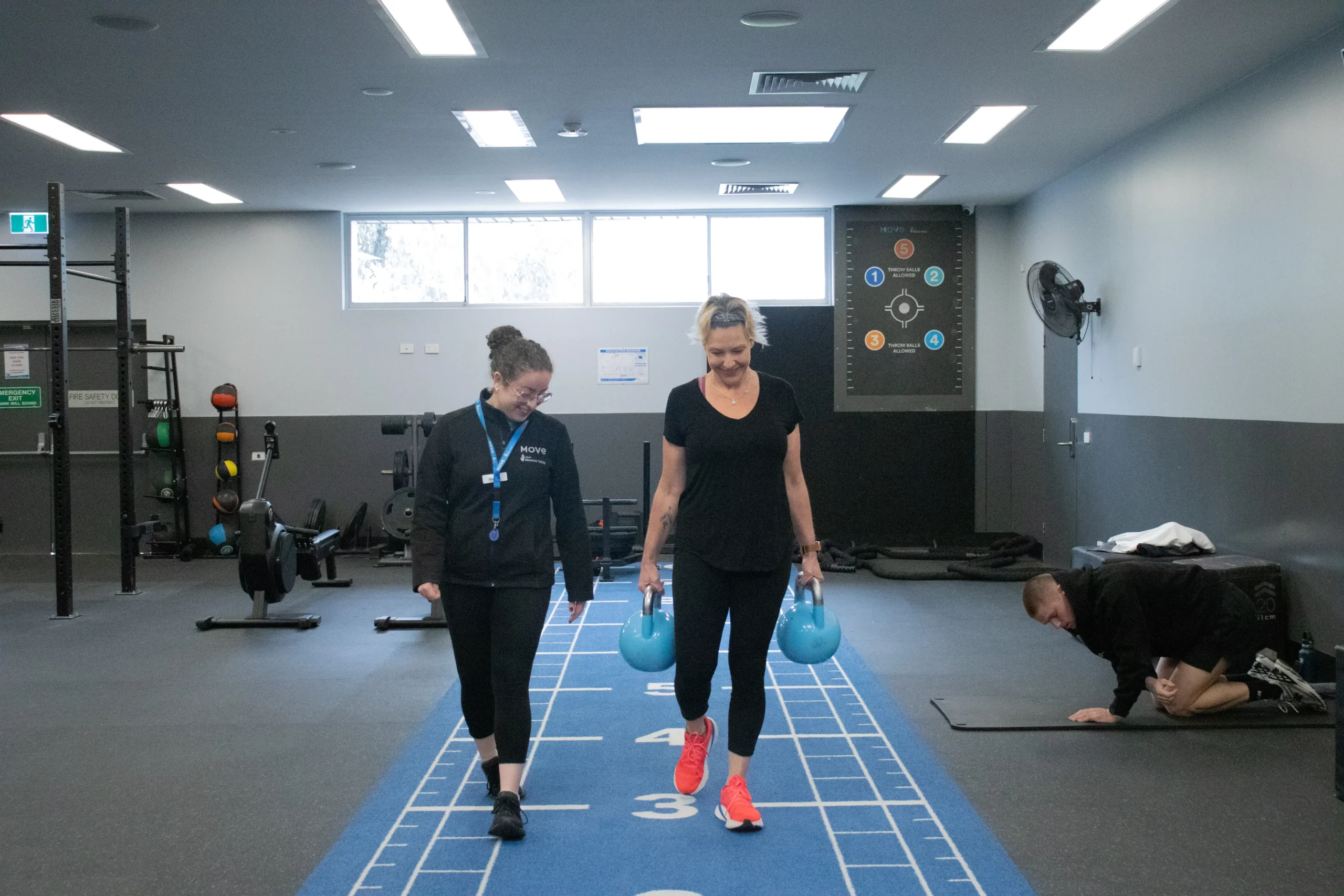
- Progressive resistance (weights, machines or bands)
- 8-10 exercises covering the major muscle groups
- 2-3 sets of 8-12 repetitions
- Long-term consistency – bone adapts slowly over months, not weeks
Even 20-30 minutes twice a week can produce meaningful improvements in strength, bone health and overall wellbeing.
Remember: Consistency beats perfection.